
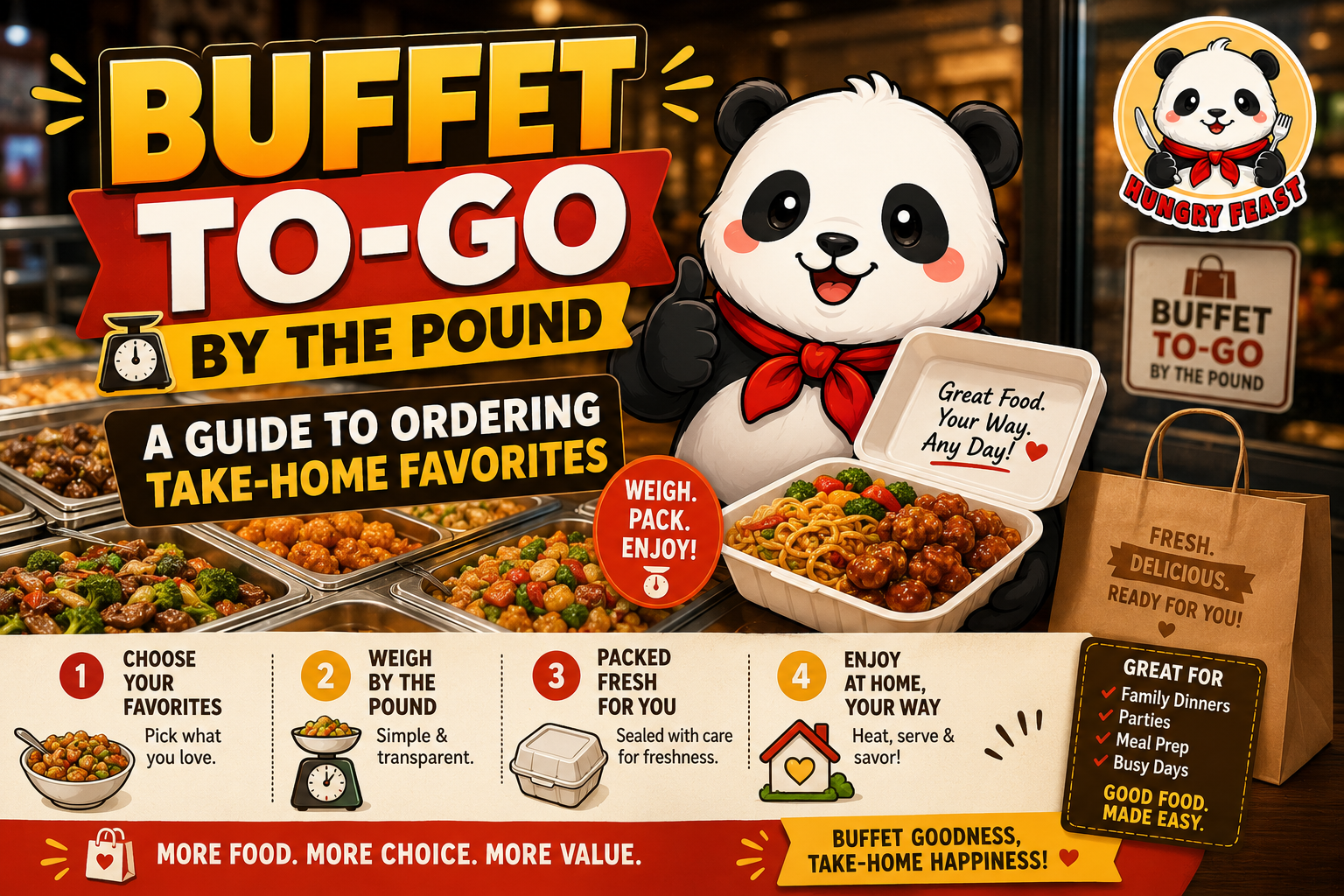

Not every craving fits into a sit-down meal. Sometimes you want the same fresh, made-throughout-the-day buffet spread, just without the dine-in experience — maybe it’s a busy weeknight, a family that can’t all make it out together, or simply a preference for enjoying your favorites at home. That’s where ordering buffet to-go comes in.
Packing your own take-home plate works a little differently than building a plate to eat on-site. Here’s what to know about choosing dishes that travel well, pacing your order, and getting the most out of a to-go visit.
Why Buffet To-Go Is a Different Experience
When you’re eating at the buffet in person, you can go back as many times as you like, and everything is served at the ideal moment — fresh off the hibachi grill, straight from the sushi counter, or fresh out of the steam trays. Ordering to-go means thinking ahead a bit more, since your container needs to hold everything you want in one trip, and some dishes travel better than others.
That doesn’t mean to-go is a lesser option — it just means a little more intention goes into what you choose and how you pack it.
Dishes That Travel Well
Not everything on the buffet is built for the ride home. Foods with sauce, crispy textures, or delicate presentation tend to hold up differently once packed into a container. Here’s a general guide to what tends to travel best.
Chinese Buffet Classics
Dishes like orange chicken, lo mein, and fried rice are reliable choices for a to-go order. They’re hearty, reheat well, and don’t lose much in quality between the restaurant and your kitchen table. If you’re ordering for a group, it’s worth grabbing a mix of a protein dish, a noodle or rice dish, and a vegetable side to round things out.
Hibachi Favorites
Hibachi dishes generally travel well too, especially proteins like chicken, steak, or shrimp paired with a scoop of fried rice. Since these are prepared teppanyaki-style, ask if a fresh batch is available before packing your container — food straight off the grill will hold up better after the trip home than food that’s been sitting a while.
Seafood and Snow Crab
Snow crab legs, typically featured during weekend and holiday dinner service, can be packed to-go, though they’re best enjoyed as close to pickup time as possible since seafood doesn’t reheat quite as well as heartier dishes. If you’re planning a to-go order around crab, it’s worth checking the seafood buffet for what else might be available that day to round out your order.
Dishes to Think Twice About
Fresh sushi is one of the trickier items to take home. It’s meant to be enjoyed shortly after it’s made, and the texture of rice and delicate toppings can change noticeably after time in a container, especially if it’s headed to the fridge. If sushi is a must-have, plan to eat it as soon as possible after pickup rather than saving it for later.
Tips for Packing a Balanced To-Go Order
- Pack sauces and heavier dishes on one side, lighter items on the other. This helps keep textures from getting soggy in transit.
- Order proteins and starches separately if you can. Keeping rice or noodles apart from a sauced protein helps both hold up better once reheated.
- Ask what’s freshly prepared. Since dishes are restocked throughout the day, timing your order around a fresh batch — especially for hibachi — makes a noticeable difference.
- Reheat gently at home. Lower, slower reheating in a microwave or oven tends to preserve texture better than a quick high-heat blast.
Ordering for a Group
If you’re packing a to-go order for a family or group, it helps to think in terms of shared dishes rather than individual plates — a larger portion of fried rice, a couple of protein options, and a vegetable side tend to go further and give everyone something they’ll enjoy, similar to how you’d build a spread for a group visit.
Planning Your Visit
To-go pricing is typically based on weight, so the more selective you are about what goes into your container, the more control you have over your order. If you have questions about current pricing or hours for pickup, it’s worth checking the <a href=”https://hungryfeastnpr.com/contact-us/”>Contact Us</a> page or calling ahead before you stop in.
Final Thoughts
A buffet to-go order lets you bring the same variety you’d find dining in — from Chinese classics to hibachi to snow crab — home with you. The key is choosing dishes that hold up well in transit, timing your pickup around freshly prepared batches, and packing your container with a little intention. Do that, and take-home buffet can be just as satisfying as eating in.
Frequently Asked Questions
Is buffet to-go priced differently than dining in?
To-go orders are typically priced by weight rather than a flat dine-in rate, so it’s worth checking current pricing when you order.
What dishes travel best in a to-go order?
Chinese buffet staples like orange chicken, lo mein, and fried rice, along with hibachi proteins, tend to hold up well. Sushi and other delicate items are best eaten soon after pickup.
Can I order snow crab to-go?
Yes, though since crab is typically featured during weekend and holiday dinner service, it’s worth checking availability ahead of your visit if crab is the main reason for your order.
How should I reheat buffet food at home?
Gentle, lower-heat reheating tends to preserve texture better than a quick high-heat microwave blast, especially for fried or breaded dishes.
Should I keep sauced dishes separate from rice or noodles?
It’s a good idea. Keeping proteins and starches in separate sections of your container, or in separate containers altogether, helps prevent everything from getting soggy in transit.
Is to-go a good option for feeding a larger group?
Yes. Ordering a mix of shared dishes — a protein, a starch, and a vegetable side — tends to work better for groups than trying to pack individual plates for each person.