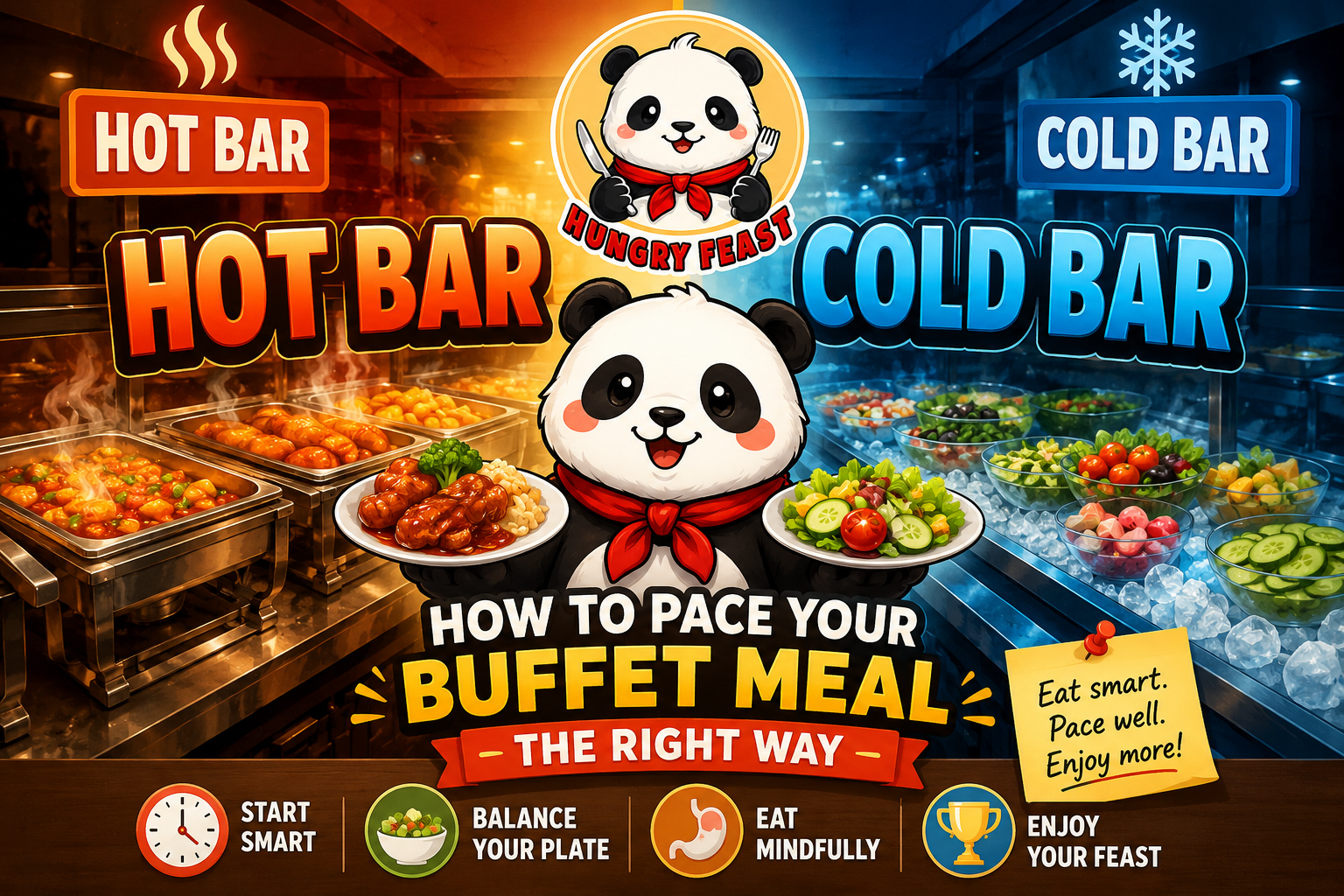

Walk into any large buffet and you’ll notice it’s really made up of two different worlds: the hot bar, packed with steaming trays of hibachi, Chinese classics, and seafood, and the cold bar, home to fresh sushi, salads, and chilled sides. Most guests instinctively grab a plate and start wherever they’re standing — but the order you eat in actually matters more than you’d think.
Pacing your meal between hot and cold dishes isn’t just about temperature. It affects how much you can enjoy, how fresh each dish tastes, and whether you leave the table satisfied instead of overstuffed on the wrong things. Here’s how to think about it.
Why Order Matters at a Buffet
Your palate reacts differently to food depending on what you’ve eaten before it. Heavy, hot, sauce-based dishes can dull your ability to taste something delicate right after. That’s why chefs at multi-course restaurants build a meal from light to heavy — and the same logic applies at a buffet, even though you’re the one building the menu.
Starting with cold, lighter dishes lets you taste them at their best. Moving into hot, heartier dishes afterward means you’re not skipping the subtle stuff in favor of what fills you up fastest. A quick lap around the full buffet before you serve yourself is the easiest way to plan this out — you’ll see what’s fresh on both sides before committing to a plate.
The Case for Starting Cold
The cold bar is usually where fresh sushi, chilled salads, and lighter starters live. These dishes are meant to be eaten cool, and they tend to lose their appeal if they sit on a plate next to hot food for too long.
Starting here also means you’re not filling up on rice or fried items before you’ve had a chance to try the more delicate options. A small plate of sushi — a couple of rolls and a piece or two of nigiri — is a great way to open the meal without overcommitting.
What to Prioritize on the Cold Bar
Fresh sushi should be your first stop if it’s offered, since it’s typically restocked throughout service and tastes best shortly after being set out. Salads and chilled sides are a good secondary pick if you want something light before moving to hot dishes.
Moving Into the Hot Bar
Once you’ve had a lighter start, the hot bar is where the meal really builds. This is where you’ll find Chinese buffet staples like orange chicken, lo mein, and fried rice, along with the hibachi station and seafood offerings like snow crab.
Because hot dishes are heavier, this is the point to start being selective rather than grabbing a little of everything. Pick two or three dishes you’re most excited about instead of sampling the entire hot bar in one trip — you can always go back.
Timing the Hibachi Station
The hibachi station deserves its own strategy within the hot bar. Since dishes are prepared teppanyaki-style in small batches, timing matters. If you catch a fresh batch coming off the grill, that’s the moment to grab a plate rather than settling for food that’s been sitting under a heat lamp.
Don’t Rush the Seafood
Snow crab legs, featured during weekend and holiday dinner service, are rich and filling enough to deserve their own plate later in the meal. Trying to combine crab with noodles or fried rice on the same plate usually means one or the other doesn’t get the attention it deserves. If you’re a seafood fan, it’s worth checking the seafood buffet for what else is available alongside the crab before you fill your plate.
A Simple Rule for Seafood Pacing
Treat seafood as its own course. Finish what’s on your current plate, take a short break, then start fresh with a plate dedicated to crab or other seafood so it doesn’t get crowded out by heavier starches.
Finishing Strong: Dessert Last
After moving from cold to hot, save dessert for the very end. Pacing yourself earlier in the meal — smaller portions, spaced-out trips — means you’ll actually have room to enjoy something sweet instead of skipping it because you’re too full.
A Simple Pacing Framework
- Round one: Cold bar — sushi, salads, chilled sides
- Round two: Hot bar — Chinese classics, two or three favorites
- Round three: Hibachi station, timed to a fresh batch
- Round four: Seafood, on its own plate
- Round five: Dessert
This isn’t a strict rulebook — it’s a framework you can adjust based on what you’re most excited to try. The goal is simply to avoid filling up on the wrong things too early.
Final Thoughts
Hot and cold bars aren’t just two sides of the same buffet — they call for two different approaches. Starting cold, moving to hot, and treating seafood and dessert as their own rounds is the easiest way to taste everything at its best. A little pacing goes a long way toward turning a good buffet meal into a great one.
Frequently Asked Questions
Should I eat cold food or hot food first at a buffet?
Starting with cold dishes, like sushi and salads, is generally recommended since they’re best enjoyed before your palate is loaded up with heavier, hot food.
Why does the hibachi station need special timing?
Hibachi dishes are prepared in small batches, so catching a fresh batch straight off the grill gives you a noticeably better experience than food that’s been sitting for a while.
Can I mix seafood with other hot dishes on the same plate?
You can, but many guests prefer giving seafood, especially snow crab, its own plate later in the meal so it isn’t crowded out by rice or noodles.
How many trips should I plan for during a buffet meal?
There’s no fixed number, but smaller, more frequent plates tend to work better than one large plate, since it lets you enjoy each dish while it’s freshest.
Is it okay to skip the cold bar entirely?
Of course — it comes down to personal preference. But trying at least a little from the cold bar first can help you avoid filling up before tasting the lighter, fresher options.
When’s the best time to get dessert?
Saving dessert for the end of your meal, after pacing yourself through the earlier rounds, gives you the best chance of actually having room to enjoy it.