
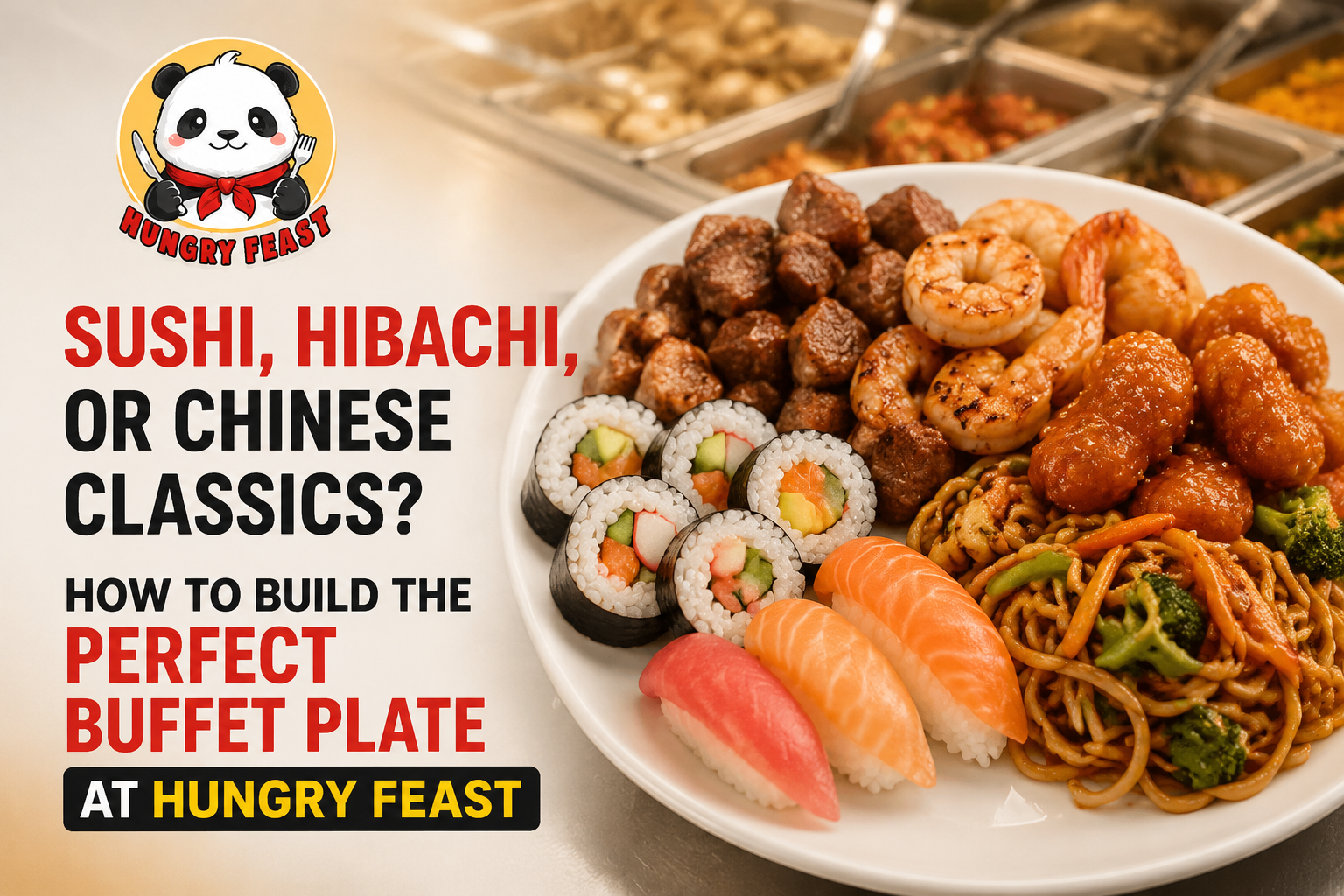

Walking up to a buffet spread that includes fresh sushi, a sizzling hibachi station, and a full line of Chinese classics is exciting — and, for some first-time guests, a little overwhelming. Where do you even start? Do you fill up on crab legs first and regret it later? Do you save room for dessert? Is it okay to mix cuisines on one plate?
The good news is there’s no wrong way to enjoy an all-you-can-eat buffet. But if you want to get the most out of your visit, a little strategy goes a long way. Here’s how to build a plate — or a full meal, plate by plate — that lets you taste everything without wasting a single bite.
Start With a Game Plan, Not a Full Plate
The biggest mistake new buffet guests make is loading up their very first plate with a little bit of everything. It feels efficient, but it usually backfires. Rice, noodles, and fried items fill you up fast, which means you run out of stomach space before you’ve even tried the good stuff.
Instead, treat your meal like a tasting menu. Walk the full <a href=”https://hungryfeastnpr.com/buffet/”>buffet</a> once before you serve yourself anything. Note what looks freshest, what’s being restocked, and what you genuinely want to try. Then build your first plate around two or three things you’re most excited about — not everything at once.
Why Portion Control Matters at an All-You-Can-Eat Buffet
Because the buffet is unlimited, there’s no need to stack your plate high. Smaller, more frequent trips let you eat food at its freshest, avoid the “everything mixed together and lukewarm” plate, and pace yourself so you have room for later courses like hibachi and dessert.
Round One: Fresh Sushi
Sushi is a great place to begin, especially since it’s served cold and is best enjoyed before your palate is loaded up with heavier, hot dishes. Hungry Feast’s sushi selection includes California rolls, nigiri, and spicy rolls made fresh throughout the day.
A good first plate might include one or two roll varieties and a piece or two of nigiri. This gives you a light, flavorful start without filling up on rice. If you’re new to sushi, spicy rolls are an easy, approachable entry point, while nigiri lets you taste the seafood on its own.
Round Two: Chinese Classics
Once you’ve had a light start, move into the heartier Chinese buffet offerings. This is where dishes like orange chicken, lo mein, fried rice, and wonton soup come in — comfort food staples that most guests know and love.
Because these dishes are filling, this is a good spot to be selective. Instead of taking large portions of everything, pick two or three favorites and pair them with a smaller portion of rice or noodles. If you want to explore the full range of options, the <a href=”https://hungryfeastnpr.com/buffet/chinese-buffet/”>Chinese buffet</a> line typically rotates a few specials throughout the day, so it’s worth a second look later in your meal.
Pairing Tip for Chinese Classics
Balance a rich dish like orange chicken with something lighter, like a vegetable stir-fry or wonton soup. This keeps your palate from getting overwhelmed and leaves more room for what’s coming next.
Round Three: The Hibachi Station
The hibachi station is one of the most popular stops at Hungry Feast, and for good reason — it’s freshly prepared, teppanyaki-style, and often the centerpiece of a buffet visit. Because hibachi dishes are cooked to order or in small batches, timing your trip matters.
If you see a fresh batch coming off the grill, that’s your moment. Hibachi pairs well with a small scoop of fried rice or noodles, but try not to double up on starches if you already had rice with your Chinese classics plate.
Round Four: Snow Crab and Seafood
Save room for this one. Snow crab legs are one of the signature draws of the buffet, especially during weekend and holiday service when they’re featured as part of Friday, Saturday, and Sunday dinner. Crab is filling and rich, so it deserves its own dedicated plate rather than being crowded next to a pile of noodles.
If you’re a seafood lover, it’s worth exploring what else is offered beyond crab. The <a href=”https://hungryfeastnpr.com/buffet/seafood-buffet/”>seafood buffet</a> often includes additional options alongside the crab legs, so take a slow lap before committing your plate to crab alone.
How to Eat Snow Crab Without the Mess
Crack shells over your plate, not the table, and use short, controlled breaks rather than forcing the shell apart. Many buffet guests find it easiest to eat crab last, once their hands are free from juggling multiple dishes.
Round Five: Save Room for Dessert
It’s tempting to skip dessert after rounds of sushi, hibachi, and crab, but pacing yourself earlier means you can end your meal on a sweet note. A small dessert plate is a nice way to close things out without feeling like you overdid it.
A Few General Buffet Tips
- Take smaller portions more often. You can always go back — that’s the whole point of all-you-can-eat.
- Try before you commit. If you’re unsure about a dish, take a small taste before loading up a full portion.
- Pace your trips. Give yourself a few minutes between plates so you can actually enjoy the food instead of rushing.
- Ask if you’re unsure. Staff can point out what’s freshly restocked or recommend a favorite if you’re not sure where to start.
Bringing the Family Along
If you’re planning a family visit, it helps to know that kids’ pricing and portions are available for younger guests, and there’s plenty on the buffet that appeals to picky eaters — think fried rice, chicken, and noodles — alongside more adventurous options for adults. Buffets are naturally suited to mixed groups since everyone can build their own plate around what they like best.
Final Thoughts
The best buffet plate isn’t the biggest one — it’s the one that lets you enjoy each dish at its freshest, without rushing or overloading. Whether you’re drawn to fresh sushi, the sizzle of the hibachi station, comforting Chinese classics, or a full plate of snow crab, pacing yourself across a few smaller trips is the easiest way to enjoy everything Hungry Feast has to offer.
Frequently Asked Questions
Is it okay to mix sushi, hibachi, and Chinese food on the same plate?
There’s no rule against it, but many guests find they enjoy each cuisine more when it’s served on its own plate. Mixing hot and cold dishes, or delicate sushi with heavier sauces, can sometimes mute the individual flavors.
What’s the best time to visit for the freshest hibachi?
Hibachi dishes are prepared in small batches throughout service, so timing a visit for right after a fresh batch is plated tends to give the best experience. If you’re not sure, it’s fine to ask staff when the next batch is coming up.
Is snow crab available every day?
Snow crab is featured as part of the weekend and holiday dinner service, including Friday, Saturday, and Sunday. Weekday availability can vary, so it’s worth checking ahead if crab is the main reason for your visit.
How many times can I go back to the buffet?
The buffet is all-you-can-eat, so there’s no limit on trips. Smaller, more frequent plates are generally recommended over one large plate so you can enjoy each dish while it’s freshest.
Are there options for kids or picky eaters?
Yes. Alongside the more adventurous options like sushi and crab, the buffet includes familiar favorites like fried rice, noodles, and chicken dishes that tend to appeal to younger or less adventurous eaters.
Do you offer any discounts for seniors or military?
Yes, discounted pricing is available for seniors and military guests at both lunch and dinner. It’s a good idea to ask about current pricing when you arrive, since rates can vary between lunch and dinner service.